
Philosophical Investors and Thought Leaders in the Tech World
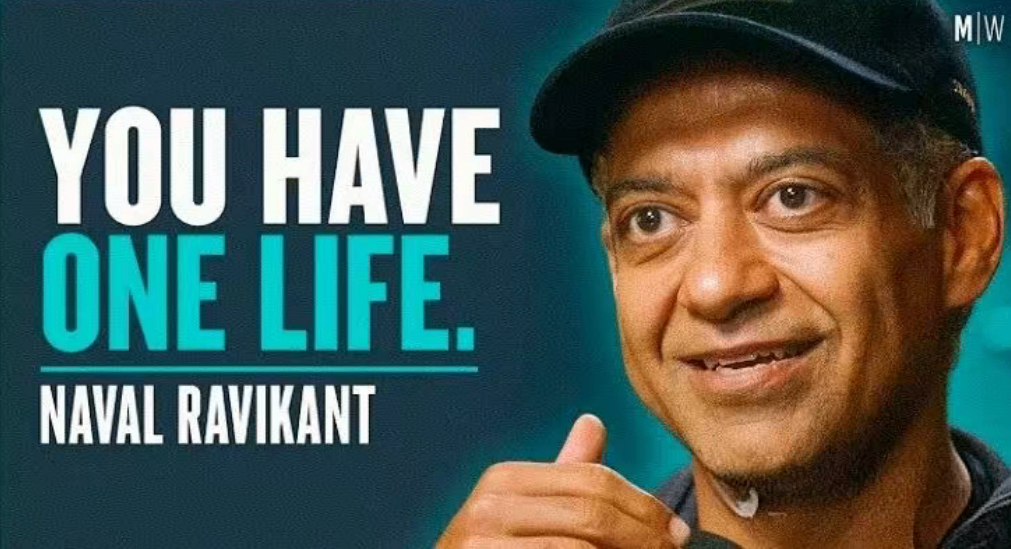
Naval Ravikant is one of the most influential thinkers and investors in today's technology sector. As the co-founder of AngelList, he has not only shaped the modern startup investment ecosystem but also influenced millions of people worldwide who pursue wealth and freedom through his profound philosophical insights and pragmatic wisdom.
Born in India, Naval immigrated to the United States with his family at the age of nine. He studied Computer Science and Economics at Dartmouth College before embarking on his entrepreneurial journey. He co-founded Epinions (later acquired by Shopping.com) and Venture Hacks, eventually co-founding AngelList in 2010—a platform that revolutionized how startups raise capital, enabling ordinary investors to participate in early-stage investing.
Today, Naval boasts over 3 million Twitter followers, and his blog, nav.al, has become essential reading for those seeking wisdom, wealth, and freedom. While he has invested in hundreds of tech companies including Twitter, Uber, Postmates, Notion, and Snapchat, his true influence extends far beyond financial success.

Core Philosophical Views
1. Distinguishing Wealth, Money, and Status
One of Naval's most famous concepts is the clear distinction between wealth, money, and status:
"Wealth is assets that earn while you sleep." This is the cornerstone of his intellectual framework. Wealth is not the number in your bank account; it is systems capable of continuously generating value—whether software, businesses, intellectual property, or other assets.
Money is merely a tool for transferring wealth, a form of "social credit" representing society's recognition of past value creation. Status, on the other hand, is one's ranking within a social hierarchy, which is a zero-sum game—if someone rises, someone else must fall.
Naval emphasizes: "The purpose of wealth is freedom, nothing more. It is not about buying fur coats, driving Ferraris, or sailing around the world on yachts. Those things quickly become boring and silly. Wealth is about becoming your own sovereign individual."
2. Specific Knowledge
Naval believes the key to creating wealth lies in cultivating "Specific Knowledge"—skills that cannot be taught through training but develop naturally through pursuing genuine curiosity and passion. Such knowledge has the following characteristics:
Cannot be acquired through formal schooling
Is creative or technical in nature
Requires leverage to scale
Often stems from a unique combination of personal experiences and interests
He advises: "Find what you are naturally good at and love, then invest 10,000 hours to become a world-class expert."
3. The Three Forms of Leverage
Naval identifies three types of leverage necessary for wealth creation:
Labor Leverage: Having others work for you (the oldest form of leverage)
Capital Leverage: Using money to make money (requires sound judgment)
Code and Media Leverage: The leverage of the new era, replicable at zero marginal cost
He particularly highlights the power of code and media: "Software and media are permissionless leverage. They are the secret behind the newly wealthy."
4. Judgment Above All Else
In Naval's framework, judgment is the ultimate meta-skill. He explains: "As leverage increases, judgment becomes more critical. Without leverage, judgment matters little. But as leverage grows, the importance of judgment increases exponentially."
Good judgment comes from experience, and experience comes from bad judgment. It is a skill that requires time and practice to cultivate.
High-Traffic Original Quotes and Analysis
1. The "How to Get Rich (Without Luck)" Tweet Storm
In 2018, Naval released a series of tweets later known as the "How to Get Rich" tweet storm, garnering hundreds of thousands of likes and retweets:
"Seek wealth, not money or status. Wealth is assets that earn while you sleep. Money is how we transfer wealth. Status is your place in the social hierarchy."
"The Internet has massively broadened the possible space of careers. Most people haven't figured this out yet."
"Play long-term games. Long-term relationships. All returns, whether in wealth, relationships, or knowledge, come from compound interest."
"There is no such thing as a 'business' skill. Avoid business magazines and business courses."
"Learn to sell. Learn to build. If you can do both, you will be unstoppable."
This tweet storm gained immense popularity because it offered a clear, actionable framework rather than empty motivational rhetoric. It debunked the myth that getting rich requires luck or privilege, emphasizing instead the importance of systems, skills, and leverage.
2. "If You Want to Learn, Do"
In a recent podcast, Naval shared his experience founding a new company called "The Impossible Company":
"I recently started another company. It's a very difficult project. In fact, the company is named The Impossible Company. Interestingly, it sent me into a learning frenzy. I found myself questioning Grok and ChatGPT more, reading more books, listening to more tech podcasts, and brainstorming more. I'm just more mentally active."
"Action leads to the desire to learn, which produces learning. Of course, there is also learning from the action itself. And I think if you learn purely for the sake of learning, it becomes hollow after a while. The motivation isn't the same."
This sharing reflects Naval's philosophy of practice: true learning comes from action, not passive consumption of information. This aligns with his overall ideology—value creation requires actual execution.
3. Thoughts on AI
In the February 2026 podcast episode "A Motorcycle for the Mind," Naval shared his insights on AI:
"Recording podcasts is so rigid because you have to sit down, schedule time, and have a huge microphone pointed at your face. It's not casual. This makes conversations less authentic—more rehearsed, more practiced."
"My brain is driven by my legs."
"No one can predict the future. That is the nature of the future. If we could predict it, we would already be there."
"So talking about the future is always dangerous, but please be forgiving. Obviously, we are discussing things in February 2026, using the information we have now, not perfect hindsight."
These viewpoints showcase Naval's humility and pragmatism. Even when facing transformative technologies like AI, he continues to emphasize the importance of human experience and acknowledges the limitations of prediction.
Characteristics of Naval's Intellectual System
1. Interdisciplinary Integration
What makes Naval's thinking unique is his ability to integrate insights from various fields into a coherent system. He frequently references:
Economics: Free markets, incentives, scarcity
Philosophy: Epistemology, existentialism, ethics
Evolutionary Biology: Adaptation, survival strategies
Physics: Leverage principles, systems thinking
Psychology: Motivation, cognitive biases, happiness
2. Pragmatic Orientation
Unlike many "armchair philosophers," Naval's thoughts are always action-oriented. He emphasizes: "People talk too much and do nothing... They don't encounter reality. They don't get feedback—the harsh feedback from free markets, physics, or nature."
This is also why, even after reaching the peak of his investment career, he chose to start new companies: "I certainly don't want to be just a philosopher, media personality, or commentator."
3. Systems Thinking
Naval rarely offers quick fixes or life hacks. Instead, he provides systems—interconnected principles and concepts applicable to various situations. His "How to Get Rich" framework is a prime example: it is not a set of steps but a mental model for understanding the fundamental elements of wealth creation.
4. Long-termism
In an era of instant gratification, Naval firmly advocates for long-term thinking: "Play long-term games. Long-term relationships. All returns come from compound interest." This quality of patience and perseverance permeates both his investment strategy and personal philosophy.
Influence and Legacy
Naval Ravikant's influence transcends traditional metrics of success. While financially very successful, his true legacy lies in:
Democratizing Investment: Through AngelList, he enabled ordinary people to participate in startup investing.
Disseminating Ideas: Through free content and concise expression, he made complex concepts accessible.
Practical Wisdom: He combined philosophical thinking with practical application, providing guidance that is both profound and useful.
Role Modeling: He demonstrated how to pursue wealth and success without sacrificing integrity and wisdom.
In an age of information overload and superficial advice, Naval's voice is particularly precious. He reminds us that true wisdom comes from deep thinking, continuous learning, and courageous action. His ideas are not just about how to get rich, but about how to live a meaningful, free, and fulfilling life.
As he said: "The purpose of wealth is freedom." And Naval Ravikant's philosophy serves as a valuable guide to help us attain that freedom.