
RCEP Boosts Southeast Asian Agricultural Products' Exports to China.
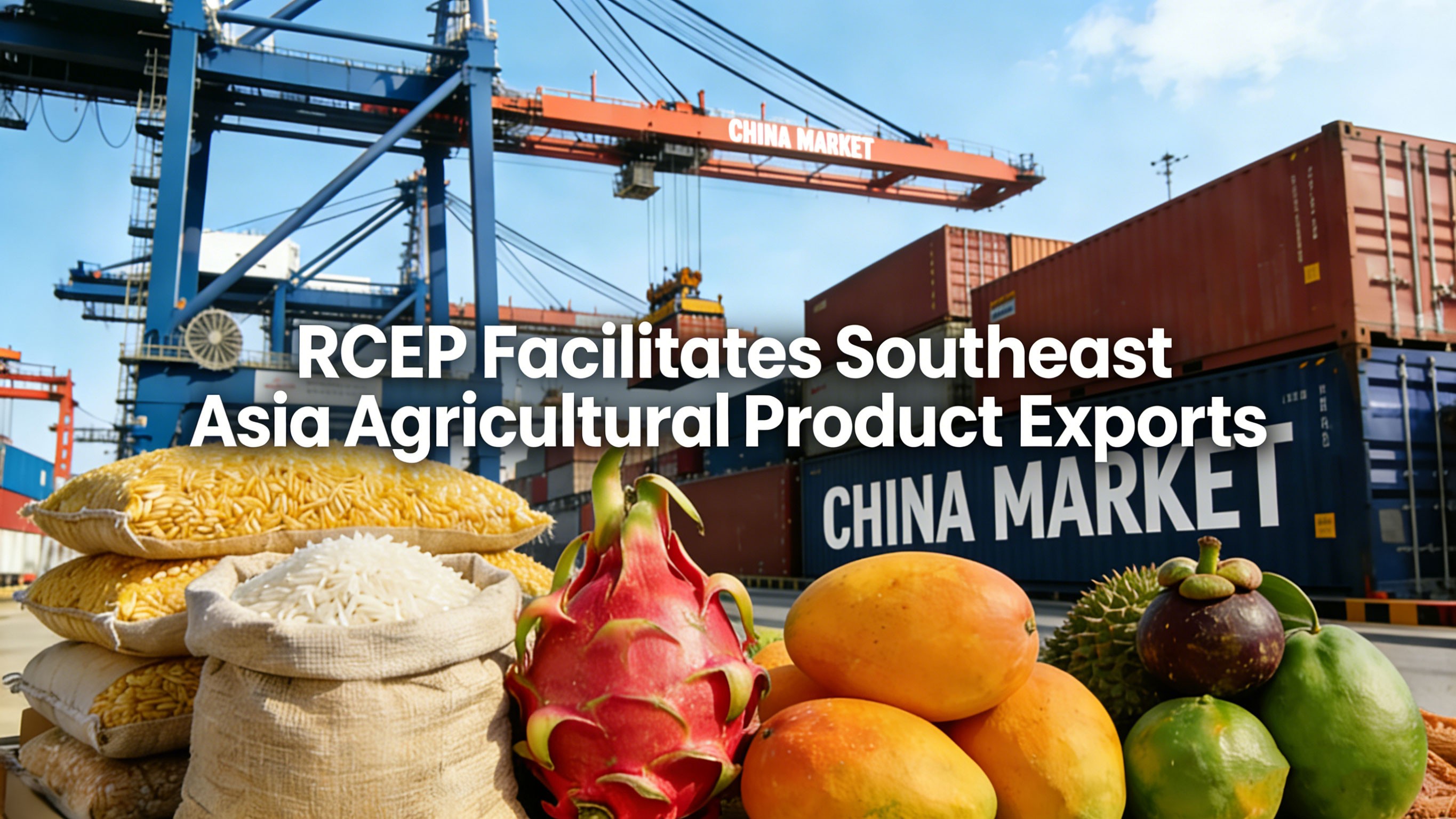
Against the backdrop of the in-depth implementation of the Regional Comprehensive Economic Partnership (RCEP), the export of agricultural products from Southeast Asia to China has become the fastest-growing dividend sector in the region. Tariff reductions, improved cold chain logistics, and e-commerce penetration have accelerated the entry of characteristic agricultural products into China. In 2025, Vietnam's fruit and vegetable exports to Malaysia increased by nearly 80% and to Australia by 30%, setting a model for regional trade integration.
Core Opportunities:
This explosive growth stems from the superposition of three major factors: tariff dividends, rule innovations, and market demand in China.
Tariff reduction is the core benefit. Under RCEP, many Southeast Asian characteristic agricultural products such as Thai durians and Vietnamese pitayas have achieved zero tariffs or substantial tariff reductions, directly reducing costs and enhancing price competitiveness in the Chinese market.
The Rules of Origin (ROO) cumulation principle reduces the supply chain costs for enterprises. It allows materials from other RCEP member states to be accumulated towards the origin requirement, greatly facilitating processed exports.
China's consumption upgrade has spawned huge demand. Platforms such as Pinduoduo, JD.com, and Douyin Supermarket have increased direct sourcing, opening up broad markets for Southeast Asian agricultural products.
Latest Cases (2025-2026):
Policy dividends have been converted into actual growth, and the following cases from 2025 to 2026 are quite representative.
Vietnam's fruit and vegetable exports have benefited significantly. In 2025, its exports to Malaysia and Australia grew substantially. A Vietnamese pitaya cooperative doubled its exports to China with RCEP certificates, achieving a net profit of over 300 million Vietnamese dong.
Cambodia's fresh mangoes made a breakthrough in 2025, with the first batch officially exported to China. Leveraging RCEP and bilateral agreements, the export volume surged. A fruit farmer cooperative in Phnom Penh stated that customs clearance time has been reduced by 30% thanks to RCEP, and Chinese customers place orders directly on Douyin.
Malaysia's Mao Shan Wang durians have maintained strong growth in both volume and price in the Chinese market. A fruit farmer from Pahang exported over 600 tons annually through JD Fresh, with an income exceeding 10 million Malaysian ringgit.
After the relaxation of access standards under RCEP, Indonesia's dried bird's nest exports to China increased by more than 50% in 2025. A factory in Sumatra supplies Chinese health product merchants directly via WeChat, doubling its annual profit.
Southeast Asian export enterprises can seize opportunities in four steps:
1. Apply for RCEP Certificate of Origin: First, register with the local Council for the Promotion of International Trade (CCPIT). Submit data through the declaration system, and after approval, the certificate can be collected or printed independently at low or no cost with a simple process.
2. Settle in Chinese e-commerce platforms: Meet basic requirements such as overseas enterprise qualifications, and prioritize large-traffic platforms like Pinduoduo and JD.com to quickly enter the market.
3. Build cold chain logistics: Flexibly choose sea, land, or air cold chain services. Take advantage of the China-Laos and China-Thailand railways, which will further increase speed and reduce costs in 2026, to lower losses and control costs.
4. Enhance trust through live streaming and traceability: Conduct live streaming on Douyin and Xiaohongshu to showcase fruit opening and product traceability, participate in certification, strengthen consumer trust, and improve brand competitiveness.
The deepening of RCEP and the improvement of cross-border infrastructure will continue the export dividend. By grasping policies, relying on e-commerce platforms, optimizing logistics, and building brands, Southeast Asian enterprises can share the opportunities in the Chinese market and promote the integration of bilateral trade.